


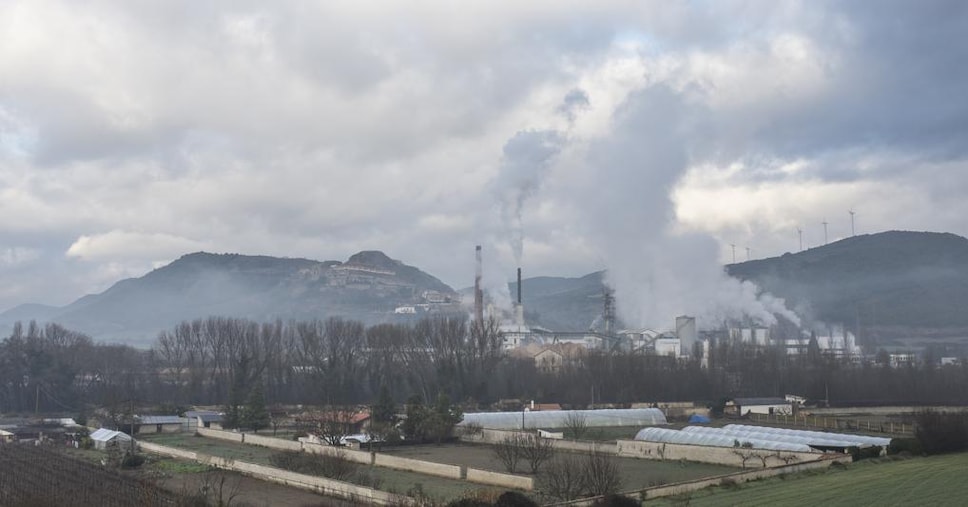
Italy is one of the countries with the lowest birth rate in the world. An alarming statistic that is rooted in multiple socioeconomic and cultural factors, but also in often underestimated physiological causes. Among these, the impact of the climate crisis, rising temperatures and environmental pollution on male fertility emerges strongly. Italian research published in the latest issue of Journal of Assisted Reproduction and Genetics has highlighted how exposure to chemical and air pollutants and rising temperatures in cities have negative effects on sperm quality. “There are many scientific works that show how these environmental pollutants, often defined as endocrine disruptors, can have a negative impact on reproductive health,” explains Professor Daniele Gianfrilli, one of the authors of the study, an endocrinologist and expert in reproductive medicine at the Sapienza University of Rome. “But the element investigated now is that heat also plays a precise role: the rise in temperatures typical of cities, due to their conformation and lack of greenery, leads to a worsening of the quality of seminal fluid. The study analysed data from the past ten years on exposure to chemical pollutants, atmospheric particulate matter and high temperatures. The results show how these factors reduce sperm concentration, motility and morphology.
Why does heat damage fertility?
The functioning of the male reproductive system is particularly sensitive to temperature variations. Men’s testicles, in order to function properly, must be at a lower temperature than the body temperature, ‘so much so that they are in the scrotal sac, i.e. they are outside our abdomen, unlike the ovary in women, precisely because they must be at a temperature one to two degrees lower,’ Gianfrilli goes on to emphasise. So, when environmental temperatures rise constantly and prolonged, as is happening more and more frequently in cities due to climate change and heat waves, the testicles also suffer this thermal stress. ‘By now, several studies show how the high temperatures to which some workers or those who frequently take saunas are exposed can affect sperm production,’ adds the professor, highlighting how the effect, although reversible in certain cases, can have consequences on the fertility of the entire urban population.
One Health: urban health for collective well-being
The link between the urban environment and reproductive health fits fully into the One Health paradigm, the concept that interconnects environmental health with human and animal health. ‘The urban environment needs to be studied, assessed and impacted with effective and proactive interventions to ensure that it is a healthy environment and not one that harms the health and well-being of citizens,’ Gianfrilli reflects. This vision is all the more crucial considering that most of the world’s population now lives in large urban agglomerations, where exposure to pollutants is greater and constant. To tackle these challenges, Gianfrilli works with Professor Andrea Lenzi for the UNESCO Chair on Urban Health at La Sapienza University of Rome, which is dedicated to training public administrators and health professionals, developing epidemiological research and recommendations to combat pollution, warming and the other factors that impact on the well-being of people living in cities.
The city also influences diabetes and obesity
Male fertility is not the only victim of the urban environment. Obesity and diabetes are chronic diseases closely linked to the conformation of cities. “The urban conformation affects the level of mobility of the citizen, so we tend to be more sedentary,” explains Gianfrilli, emphasising how “the ease of access to unhealthy or ultra-processed food, the difficulty of access to health services, or the availability of facilities and spaces for physical activity now have a significant weight. An epochal change that has inverted historical paradigms: ‘Until thirty, forty years ago, obesity and diabetes were pathologies of the economically better-off class. Now the epidemiological data show that the significant increase is in the most disadvantaged neighbourhoods with less health literacy’. Hence the need for innovative dissemination tools to increase citizens’ awareness and guide them towards healthier lifestyles. This is the objective of the Third Mission project “Spillover: how I tell you about one health” devised by the Department of Public Health and Infectious Diseases of Sapienza University of Rome, coordinated by Professor Michaela Liuccio and declined in the podcast Spill-On-Air in which Gianfrilli himself participated to involve citizens on these crucial urban health issues.
